The Artists Business Lounge
Art Business Coaching for Visual Artists


When the Art Isn’t the Hardest Part: Using AI to Support the Business of Exhibiting
For many visual artists, preparing for an exhibition is both exciting and deeply stressful. You’ve done the creative work, often over months or years. The pieces are finished. But the admin, promotion, and writing still loom.
And while these professional materials matter – artist statements, press releases, captions, proposals – they often land on your desk at the most overloaded point of your schedule. Right when you need to be focused on logistics, framing, transport, and your own headspace, you’re also expected to become a writer, marketer, and project manager.
It’s a lot. And it’s one reason many artists find the lead-up to an exhibition exhausting rather than celebratory.
But there are ways to make this part easier. AI is one of them, not to replace your voice, but to help you write and organise what’s required with less stress and more clarity.
The hidden workload of exhibiting
When people attend an exhibition, they see the artwork. Maybe the wall text, perhaps a short blurb. What they don’t see is the long list of behind-the-scenes writing and planning most artists manage themselves.
This often includes:
A refined artist statement
A well-edited bio or profile
A compelling exhibition proposal (if applying or pitching)
Thoughtful captions or wall text
A clear press release
Social media and email invites
Supporting materials for funding or PR
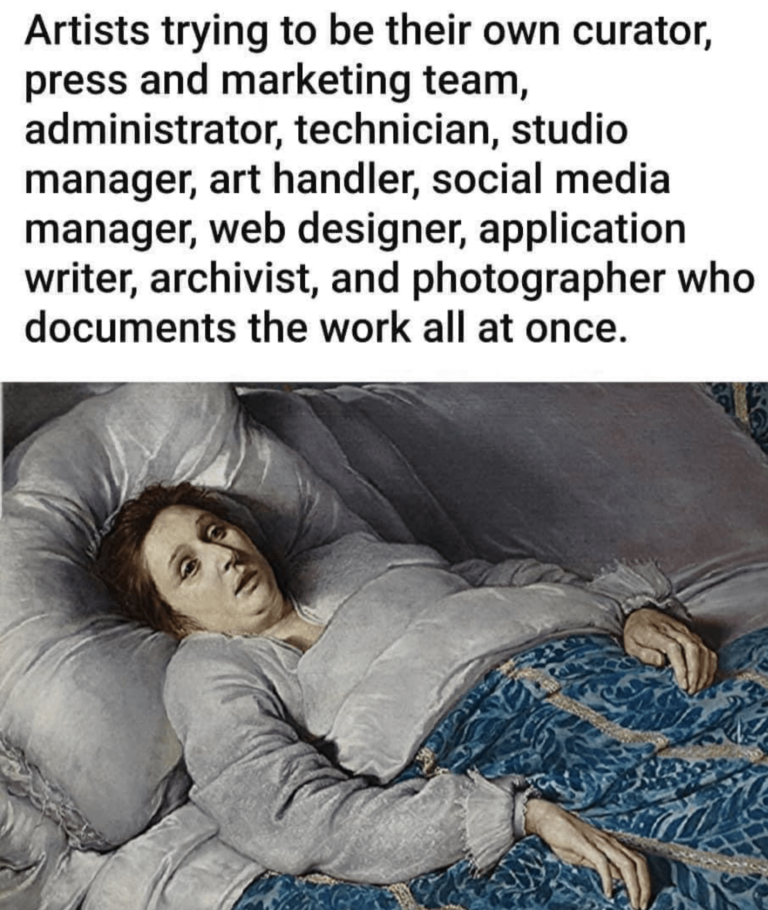
That’s a substantial amount of communication, each with a different tone, audience, and structure.
These tasks aren’t difficult because artists lack ideas.
They’re difficult because the writing needs to be strategic, professional, and timely, on top of everything else you need to get done.
Why artists struggle with this part
It’s not that artists can’t write. In fact, many are deeply articulate. The issue is capacity. Writing these materials takes time, focus, and a level of clarity that’s hard to summon mid-installation or while coordinating five other moving parts.
It also takes a certain level of detachment to be able to step back and describe your own work in terms that others will understand. That’s not always easy, especially when the work is personal or evolving.
And if you’re applying for opportunities, the pressure intensifies. You’re not just writing for context, you’re writing to persuade, advocate, and represent your practice to a selection panel, curator, or gallery.

How AI can help with the business side of exhibitions
AI has been widely discussed, and often dismissed, as a shortcut or a threat to originality. But for visual artists, the real value of AI lies not in replacing creative thinking, but in reducing the friction of non-creative demands.
Here’s how it can help with exhibitions specifically:
1. It provides structure when you’re overwhelmed
Instead of starting with a blank screen and trying to remember what makes a good press release, AI can guide you through the expected format and tone—step by step. That structure means fewer decisions and faster progress.
2. It adapts to your voice
AI tools built with artists in mind can write in accessible, professional, poetic, or academic tones – depending on your needs. You stay in control, editing and refining as needed, but you’re no longer wrestling every sentence into shape.
3. It speeds up repetitive or formulaic tasks
Not every piece of exhibition writing requires deep introspection. Some tasks—like formatting bios or drafting caption layouts—are logistical. AI handles those well, freeing your attention for where it’s most needed.
4. It’s available when you are
When deadlines are tight and feedback loops are short, you don’t always have the luxury of hiring a copywriter or waiting for peer review. AI provides you with immediate, draft-ready material that you can develop at your own pace.
This isn’t about outsourcing your voice
One of the biggest concerns artists have is whether using AI will flatten or dilute their message. But thoughtful tools don’t overwrite your ideas. They help you clarify and shape them—so you can express your practice with confidence and professionalism.
In the same way you might use a studio assistant for prep or a curator for feedback, AI becomes a behind-the-scenes partner. Not the artist, but a supporter. One that helps you do the work you were going to do anyway—faster, clearer, and with less stress.
A more sustainable way to show up
Exhibiting your work should feel meaningful. It doesn’t have to feel crushing. If the writing and admin side is where things pile up, it’s worth exploring tools that reduce that pressure, so you can show up fully to the parts only you can do.
Because when the art is finished, that shouldn’t be the moment you burn out. It should be the moment you get to share it.